What gold sheen sapphire is, and where it came from.
Two separate facts, often blurred together: the optical phenomenon that gives the stone its name, and the single Kenyan deposit that produced every example of it.
A field of needles, catching light two ways.
The golden sheen comes from a dense mixture of mineral inclusions — chiefly hematite and ilmenite, with some magnetite — sitting just beneath the surface in needle-like formations. Gemologists treat these as the stone's "key trace elements," since studying them is the most reliable way to confirm both geographic origin and treatment status.
In most stones, the needles run in a dense, roughly parallel field, producing a schiller effect: as the stone or the light source moves, a soft golden sheen travels across the surface rather than sitting in one fixed point. In rarer specimens, the same hematite-ilmenite needles align densely enough in three directions to throw a true six-rayed star — a genuine gold sheen star sapphire, and a further step up in rarity.
The effect is entirely a product of the crystal's internal structure as it formed — there is no coating, diffusion, or surface treatment involved.
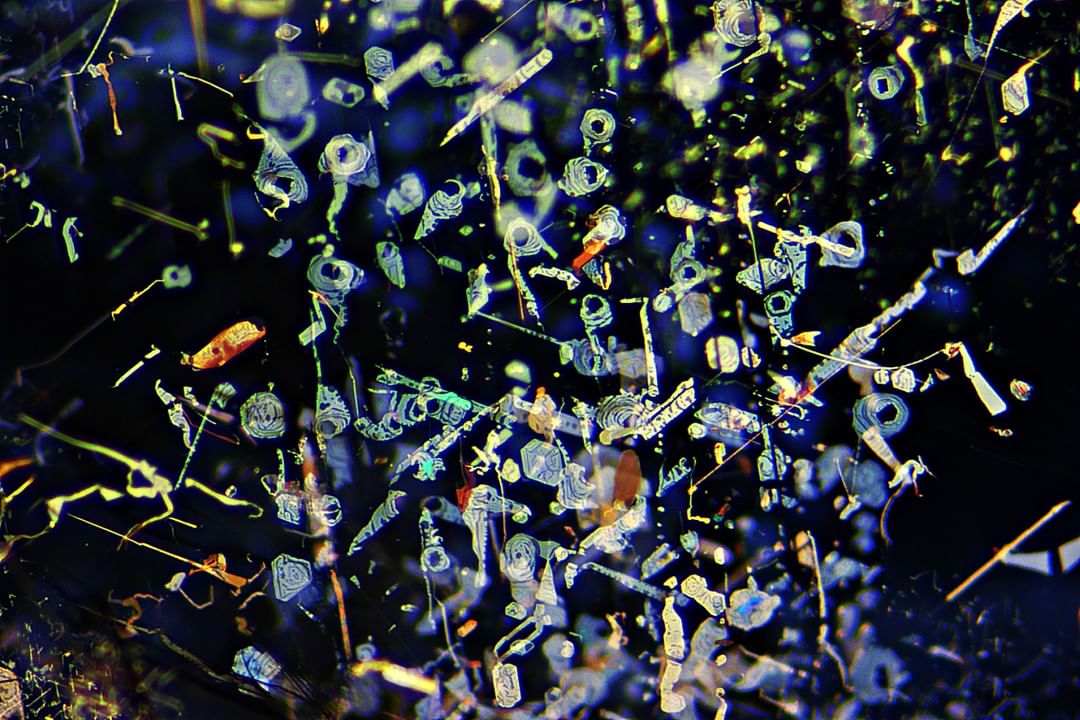
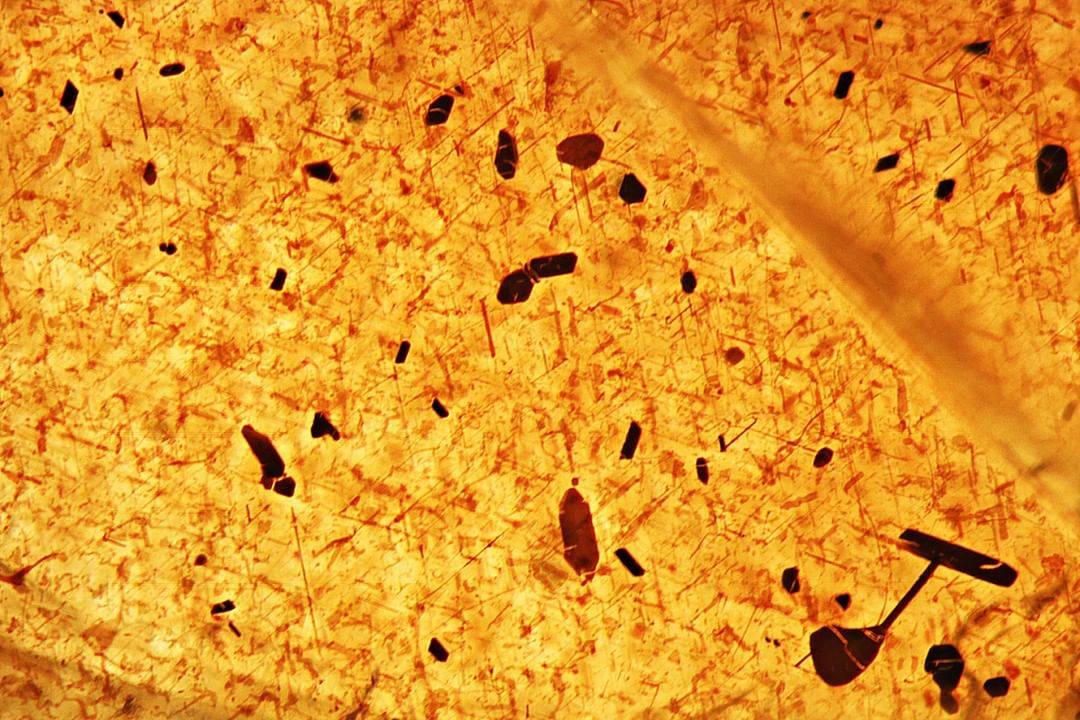
Deep navy, lit from within.
Beneath the sheen, the stone's base colour sits in the dark blue-to-navy range typical of sapphire corundum. It's this contrast — a dark ground with a warm, moving sheen sitting on top — that gives the material its particular character next to more conventional blue or star sapphires.
No two stones carry the needle field in exactly the same density or orientation, so the strength and direction of the sheen varies piece to piece.
One deposit. Kenya, near the border with Somalia.
Every gold sheen sapphire in circulation was recovered from a single deposit in Kenya, close to the Somali border. It was never a large-scale source, and it has since been exhausted — the site is no longer being mined.
That gives the material a hard ceiling: what has already been cut and certified is the complete supply. There is no forthcoming production to expect and no realistic path to new rough entering the market.
"From just inside Kenya's border with Somalia comes a most unusual sapphire featuring a golden sheen and beautifully abstract patterns of zoning."
Illustrative map — approximate region, not a surveyed boundary.